
From Resistance to Routine — Teaching Dogs to Relax in Their Crate
Crate Training
Crate resistance often stems from uncertainty; however, clear leadership changes behavior quickly. In Troon homes, where dogs experience quieter routines with high-value comfort spaces, crate challenges often center around settling calmly. Therefore, our crate training in Troon builds confidence, relaxation, and reliable crate habits.
As a result, dogs feel secure instead of stressed during crate time.

From Resistance to Routine — Teaching Dogs to Relax in Their Crate
Crate Training
Crate resistance often stems from uncertainty; however, clear leadership changes behavior quickly. In Troon homes, where dogs experience quieter routines with high-value comfort spaces, crate challenges often center around settling calmly. Therefore, our crate training in Troon builds confidence, relaxation, and reliable crate habits.
As a result, dogs feel secure instead of stressed during crate time.
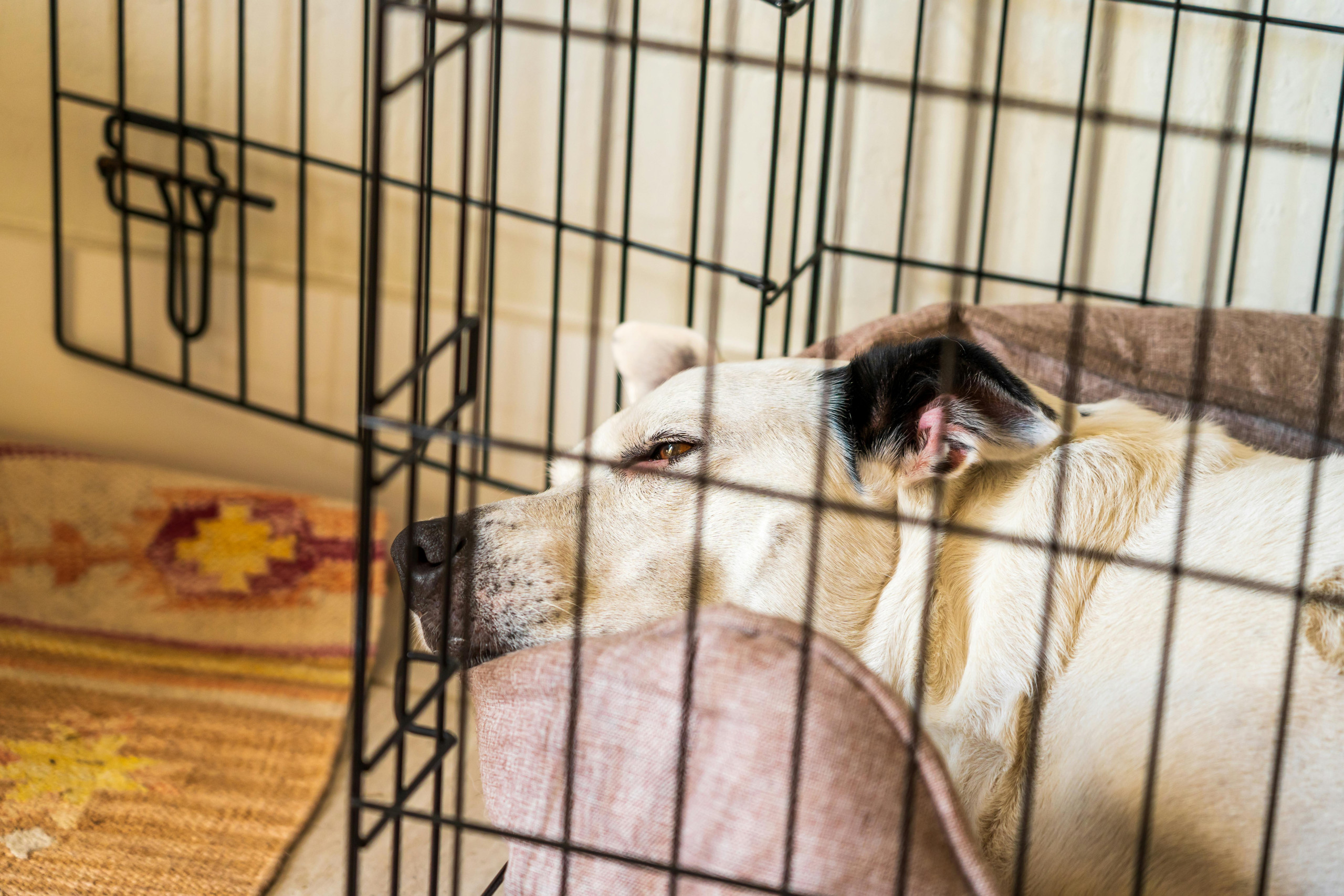
Training Designed for Your Lifestyle
Dogs in Troon often follow predictable routines; however, even small changes can trigger crate resistance. Consequently, dogs may resist confinement when boundaries feel unclear. In addition, limited exposure can heighten sensitivity.
For that reason, our training adapts to your environment and routine. We ensure crate behavior remains calm and consistent in everyday situations.
Why Choose Rob’s Dogs
Rob’s Dogs focuses on long-term behavior change, not quick fixes. We use structured, humane training that builds trust and consistency while eliminating crate resistance.
Experienced, Results-Driven Training
We work with dogs of all breeds and behavior levels, applying proven methods that build obedience and confidence.
Flexible Training Options
Choose from Board & Train or Private Lessons designed to fit within your lifestyle.
Owner Education & Support
We teach you how to lead clearly, ensuring your dog continues improving long after training ends.
Beyond the Crate: Calm Behavior and Independence
Crate training supports more than confinement. It improves impulse control, reduces separation anxiety, and helps dogs transition calmly between activities. Therefore, dogs develop better behavior both inside and outside the crate.
As structure improves, dogs settle faster, follow routines more easily, and remain calmer throughout the day.


