
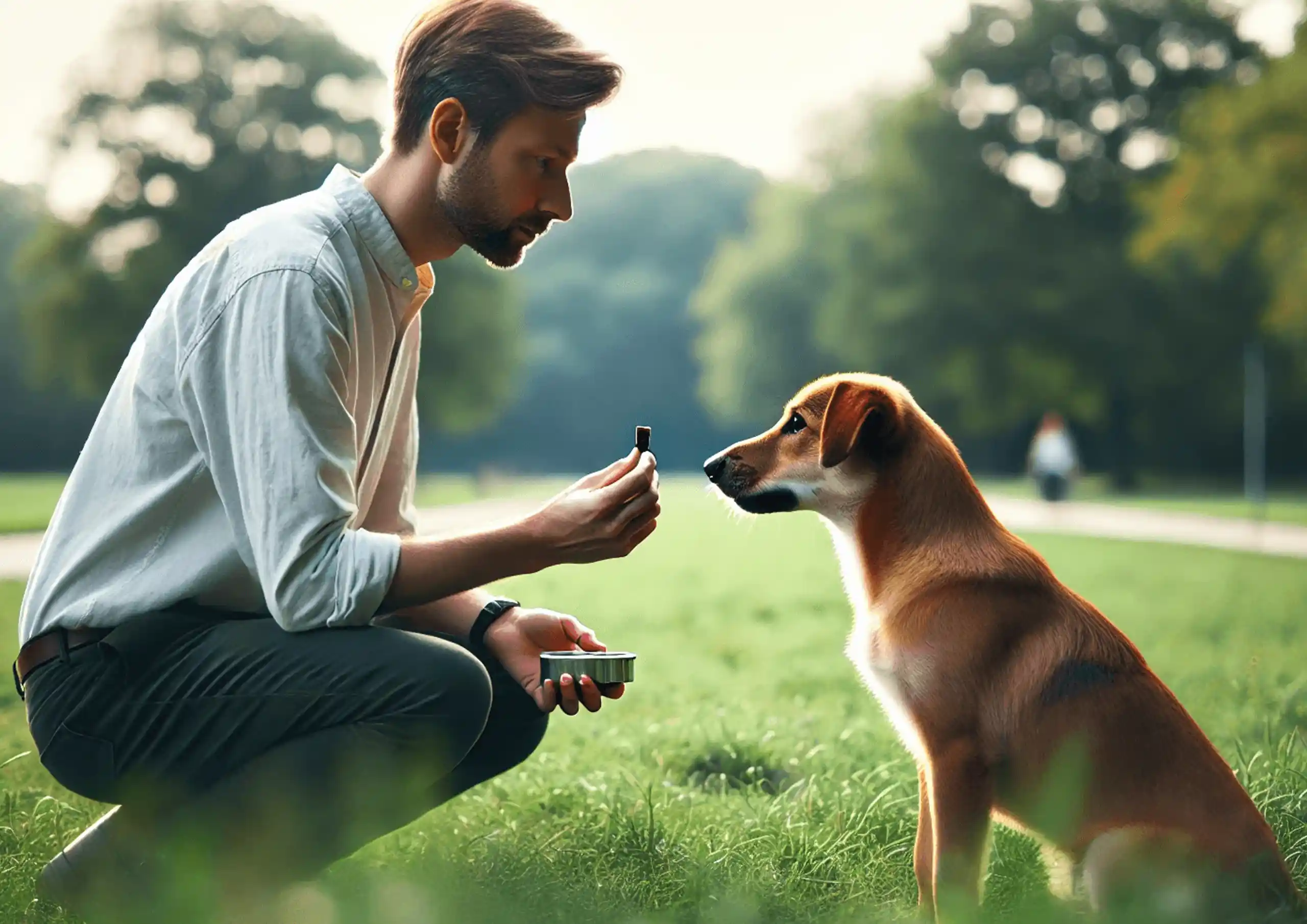
Puppy Potty Training in Desert Mountain
Puppy potty training is one of the first and most important challenges every new dog owner faces. For families in Desert Mountain and the surrounding Scottsdale area, the process comes with its own unique set of hurdles. From the intense Arizona desert heat to the fast-paced Valley lifestyle, local dog owners need practical, proven strategies that actually work in their environment.
Fortunately, you do not have to figure this out alone. Rob’s Dogs has helped hundreds of Arizona families build confident, house-trained puppies through personalized programs designed for real Valley life. Whether you live in Desert Mountain, Fountain Hills, or anywhere across the greater Scottsdale area, expert guidance makes the entire process faster and less stressful.
What Is the Fastest Way to Potty Train a Puppy?
The fastest way to succeed with puppy potty training is consistency. Puppies learn through repetition and clear structure. Take your puppy outside on a regular schedule — first thing in the morning, after meals, after naps, and before bed. Reward the behavior immediately when your puppy eliminates outside. Do not delay the reward. Even a few seconds of delay can break the connection for a young dog.
Supervision inside the home is equally important. Limit your puppy’s access to unsupervised spaces. Use baby gates or a crate to keep your pup in sight. Because of this close management, accidents decrease quickly and your puppy learns the rules of the house much faster.
Puppy Potty Training Challenges Unique to Desert Mountain
Desert Mountain sits in one of the most beautiful areas of north Scottsdale. However, the environment creates real challenges for new puppy owners. The Arizona heat is intense from late spring through early fall. During summer months, midday pavement temperatures can reach dangerous levels for sensitive puppy paws. This limits your outdoor training windows significantly.
Therefore, planning your potty breaks around cooler morning and evening hours is essential. Early walks through Desert Mountain’s open spaces and trail access can actually become powerful training opportunities. However, you must keep sessions short, especially in warm weather. Overheating is a real risk for young puppies.
Heat and Timing Your Potty Breaks
In Arizona, timing matters more than effort. Take your puppy out before 9 a.m. and after 7 p.m. during summer months. Keep outdoor sessions brief and purposeful. Bring water for both you and your pup. As a result, your puppy gets consistent outdoor exposure without the risk of heat stress.
Busy Schedules and Potty Training Consistency
Many Desert Mountain families lead active, busy lives. Work commutes, school schedules, and family activities all compete for your time. Meanwhile, your puppy still needs to go outside every one to two hours when young. Missing scheduled breaks leads to accidents inside the home. For time-limited owners, a structured board and train program can bridge this gap effectively.
Building a Puppy Potty Training Routine That Works
A solid routine is the foundation of successful house training. Puppies thrive on predictability. When the schedule stays consistent, they begin to anticipate when and where they should go. Here is a simple structure that works well for Arizona dog owners:
- Take your puppy outside immediately after waking up each morning.
- Go out within 10 to 15 minutes after every meal.
- Schedule a potty break after each nap or play session.
- Take a final trip outside right before bedtime.
- Use a consistent outdoor spot so your puppy associates the location with elimination.
- Praise and reward immediately when your puppy goes in the right place.
- Stay calm and redirect quietly when accidents happen indoors.
Positive reinforcement works best for young puppies. Treats, verbal praise, and calm affection all reinforce the behavior you want. In addition, avoiding harsh corrections during this stage builds your puppy’s confidence and trust in you.
Crate Training as a House Training Tool
Crate training and puppy potty training go hand in hand. A properly sized crate gives your puppy a safe, den-like space. Most puppies avoid eliminating in their sleeping area. Because of this natural instinct, the crate becomes a powerful management tool during house training.
Choose a crate that is large enough for your puppy to stand, turn around, and lie down comfortably. However, avoid a crate that is too large. Extra space can allow a puppy to eliminate in one corner and sleep in another. Many owners use a divider panel to adjust crate size as the puppy grows.
How Long Can a Puppy Stay in a Crate?
A general rule is one hour per month of age, plus one. For example, a three-month-old puppy can typically hold it for about four hours. Do not push these limits. Extended crate time leads to accidents and can create negative associations with the crate. Use the crate as a short-term management tool, not a long-term solution for supervision gaps.
Common Puppy Potty Training Mistakes to Avoid
Even well-intentioned owners make mistakes during house training. Knowing what to avoid saves you time and frustration. Here are the most common errors Rob’s Dogs trainers see in the Scottsdale and Phoenix area:
- Giving the puppy too much unsupervised freedom too soon.
- Punishing accidents after the fact instead of redirecting in the moment.
- Using ammonia-based cleaners that mimic the scent of urine and attract repeat accidents.
- Inconsistent schedules that confuse the puppy about expectations.
- Skipping reinforcement when the puppy goes in the right spot.
- Rushing the process and removing management tools too early.
Enzymatic cleaners are essential for properly removing accident odors. These products break down the biological compounds that standard cleaners leave behind. As a result, your puppy is less likely to return to the same spot for future accidents.
When to Call a Professional Dog Trainer
Some puppies make house training look easy. Others struggle for weeks or months despite their owner’s best efforts. If your puppy continues having frequent accidents past 16 to 20 weeks of age, or if you are seeing signs of anxiety or fear around the crate, it may be time to bring in professional support.
Dog training Phoenix families rely on includes both private one-on-one lessons and immersive board and train programs. Private dog training sessions allow Rob’s Dogs trainers to work directly with you and your puppy inside your Desert Mountain home. This personalized approach addresses the specific layout, schedule, and dynamics of your household. For families with very busy schedules, board and train Phoenix programs let your puppy build foundational skills in a structured, supervised environment before returning home.
Rob’s Dogs also works with families across Cave Creek, Carefree, and Fountain Hills who are navigating the same outdoor limitations and lifestyle pressures common throughout north Scottsdale and the surrounding area. Our team understands Arizona dog training at a local level, and that makes a real difference in outcomes.
It helps to know that our marketing partners help us connect with more Arizona families who need trusted, local puppy training support.
Why Choose Rob’s Dogs for Puppy Obedience Training
Rob’s Dogs is not a generic dog training chain. Every program is built around your dog’s temperament, your household’s needs, and your specific goals. Here is what sets Rob’s Dogs apart from other options in the Valley:
- Experienced trainers with deep knowledge of puppy development and Arizona-specific training conditions.
- Personalized training plans tailored to your puppy’s age, breed, and behavior history.
- Real-world proofing at parks, shopping centers, and Valley environments to build reliability in everyday situations.
- Clean, climate-controlled Phoenix facility with overnight supervision for board and train guests.
- BBB A+ accreditation reflecting a consistent record of professional service and client satisfaction.
- Lifetime support after graduation so you never feel alone after your dog completes the program.
Puppy obedience training at Rob’s Dogs covers more than just potty habits. We build a complete foundation including sit, stay, come, leash walking, and early socialization. These skills carry your dog through every stage of life.
Our Process: From First Call to Graduation
We keep our process simple and transparent from start to finish. Here is what to expect when you work with Rob’s Dogs:
Step 1: Phone Consult and In-Person Evaluation
We start with a conversation about your puppy’s age, history, and your household routine. Then we schedule a free in-person evaluation to assess your puppy’s temperament and identify the right training approach.
Step 2: Tailored Training Plan
Based on the evaluation, we build a customized plan. This may include a board and train stay, a series of private one-on-one lessons, or a combination of both. Every plan addresses house training, obedience foundations, and any early behavior concerns.
Step 3: Immersive Training or Private Lessons
Your puppy works with experienced trainers daily. Board and train programs provide immersive, consistent structure. Private lessons bring expert coaching directly into your home or neighborhood. Both approaches build the same strong foundation.
Step 4: Real-World Proofing
Training that only works at home is incomplete. We take dogs into real-world environments — parks, trails, and busy areas — to proof their skills under distraction. This step is essential for Desert Mountain families who want a dog they can confidently take anywhere.
Step 5: Graduation and Owner Coaching
Before your puppy comes home, we coach you on how to maintain everything your dog has learned. You leave with clear instructions, a daily routine, and the confidence to keep the momentum going.
Step 6: Ongoing Support
Graduation is not the end of the relationship. Rob’s Dogs provides lifetime support after every program. If questions come up weeks or months later, you have a team to call.
Frequently Asked Questions About Puppy Potty Training
How long does puppy potty training take?
Most puppies show significant improvement within a few weeks of consistent training. However, full reliability typically develops between four and six months of age. Every dog is different, and individual factors like breed, temperament, and owner consistency all play a role.
Can a board and train program help with house training?
Yes. Board and train programs at Rob’s Dogs address house training as part of a broader foundational curriculum. Puppies learn structure, crate comfort, and elimination habits in a supervised environment. Owners receive detailed coaching before their puppy returns home to maintain those habits.
My puppy keeps having accidents at night. What should I do?
Nighttime accidents are common in young puppies. Limit water intake in the last hour before bed. Take your puppy outside right before settling in for the night. Use a properly sized crate to encourage holding. If accidents persist, a trainer can evaluate whether a schedule adjustment or crate training refinement is needed.
Is puppy potty training different for rescue dogs?
Rescue puppies and adolescent dogs sometimes have no prior house training at all. In addition, stress from shelter life or transitions can temporarily affect bladder control. Patience, structure, and positive reinforcement are critical. Rob’s Dogs works with many Valley rescue families to build the consistency these dogs need to succeed.
Disclaimer
This article is for educational purposes only. Actual training results, timelines, and behavior outcomes may vary based on the individual dog, breed, temperament, history, and owner follow-through. For an accurate evaluation and personalized plan, contact a Rob’s Dogs trainer for a free in-person consultation.
Ready to take the stress out of puppy potty training in Desert Mountain? Visit our contact page to get started with a free evaluation from Rob’s Dogs today.
Call today at (480) 490-8941 to schedule your free estimate!
Agility training is one of the most rewarding activities you can share with your dog. In the Kierland area of Scottsdale, active dog owners are always looking for ways to channel their dog’s energy into something productive. The problem is that many dogs lack the foundation skills needed to thrive in fast-paced, distraction-heavy environments. That
Agility training is one of the most rewarding activities you can share with your dog. At the base of the stunning McDowell Mountain region, Arizona dog owners are discovering that structured movement exercises do far more than burn energy. They build confidence, strengthen communication, and sharpen focus in ways that carry over into everyday life.
Agility training is one of the most rewarding activities you can pursue with your dog in the Desert Mountain area of Arizona. It builds physical fitness, mental sharpness, and a deep bond between dog and handler. Rob’s Dogs works with active dog owners across the Valley who want to take their dog’s skills to the
Agility training is one of the most rewarding activities you can do with your dog. It builds physical fitness, sharpens focus, and deepens the bond between dog and handler. For dog owners in the Estancia community and across the greater Phoenix Valley, structured agility work offers an exciting outlet for high-energy dogs. However, getting started